
Stackable Surgical Guides in Dentistry: The Future of Precise Dental Implant Surgery
Every millimeter matters in dental implant surgery. A misplaced implant can compromise the fit of a prosthesis, disrupt a patient’s bite, and jeopardize long-term outcomes. It makes precision not just a goal but a necessity. Stackable surgical guides have fundamentally changed how dental professionals achieve that precision. By integrating advanced imaging and digital planning into a single, multi-stage system. They give clinicians full control over every critical step of the implant procedure, from bone reduction to final prosthesis fitting.
For decades, achieving a true passive fit in complex implantology was more art than science, more luck than certainty.
What Is the Role of Stackable Guides in Implant Dentistry?
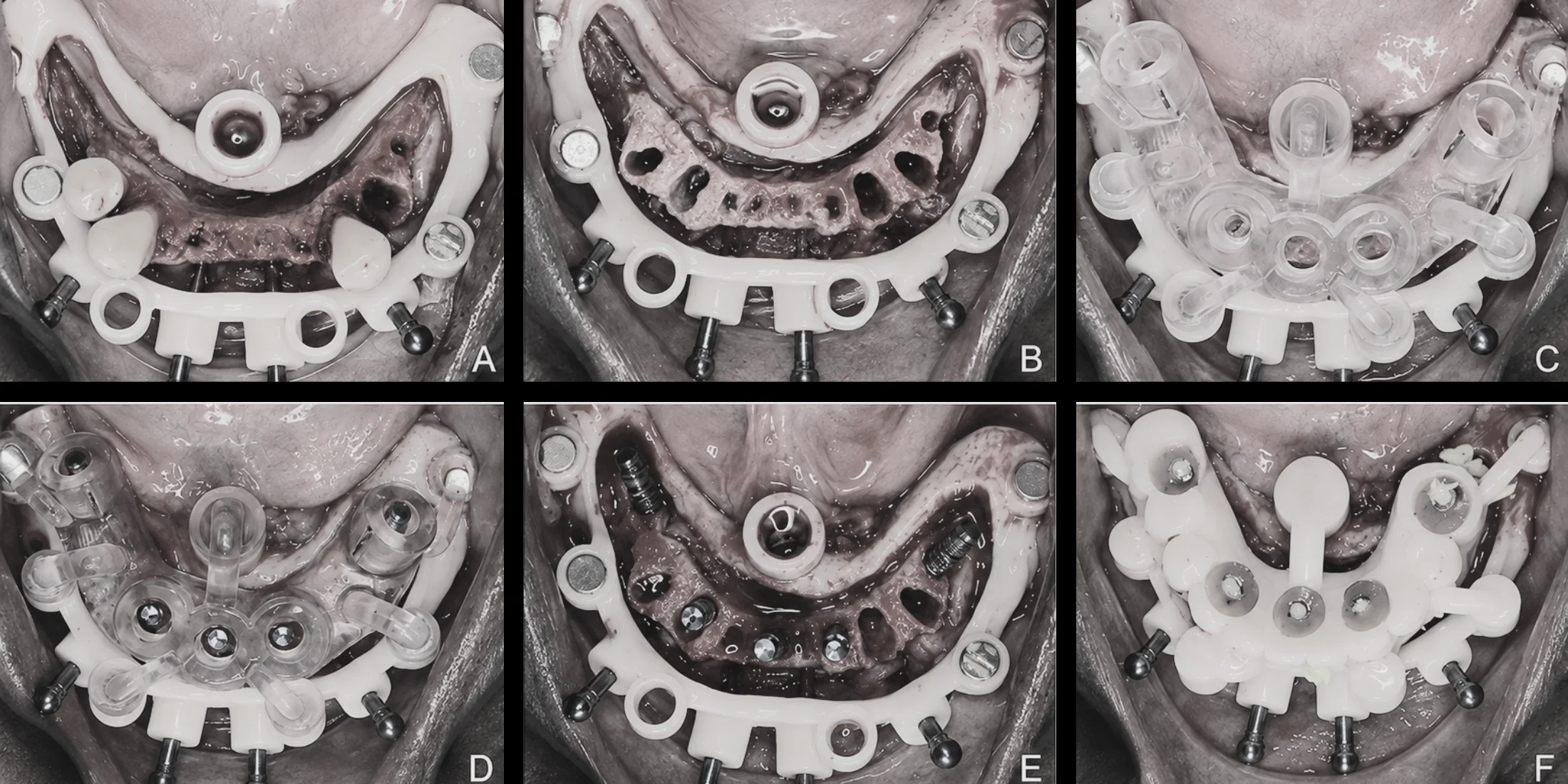
A stackable guide is a type of surgical guide designed to facilitate the accurate placement of dental implants. Unlike traditional single-use guides, stackable guides are layered on top of one another during the same surgical procedure, with each guide serving a distinct purpose at a different stage of surgery.
A typical stackable guide system includes:
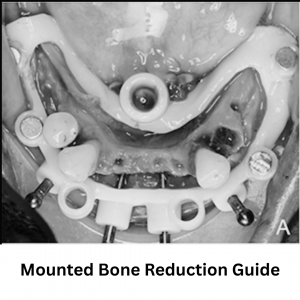
Bone Reduction Guide:
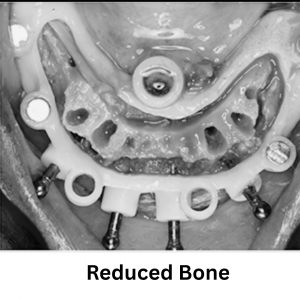
Reshapes the bone to the ideal level for implant placement and prosthesis support. The bone reduction guide is placed directly over the jaw, acting as a precise template that controls exactly how much bone is removed, creating a flat, uniform surface ideal for implant placement and prosthesis support.
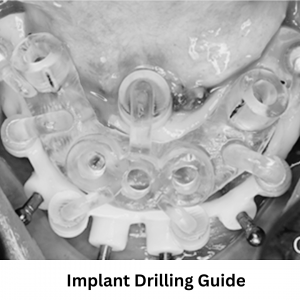
Implant Drilling Guide:
Directs the precise angle, position, and depth of each implant. Technically fabricated from the patient’s digital scan, the implant surgical guide controls drill trajectory and implant depth at each site, translating the virtual surgical plan into a precise physical outcome.
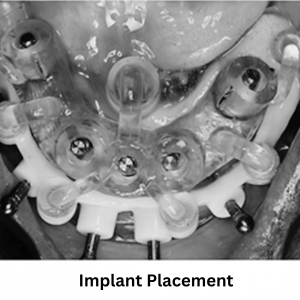
PMMA Conversion Guide:
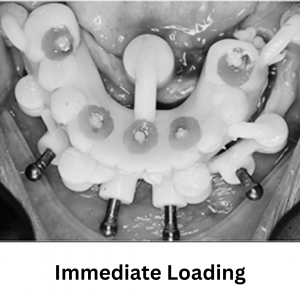
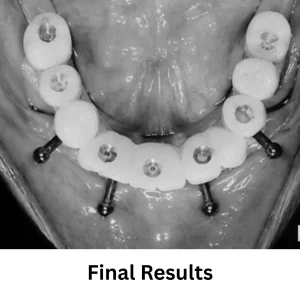
Attaches a temporary prosthesis made from polymethyl methacrylate (PMMA), a durable acrylic material, immediately after implant placement, giving patients functional teeth on the same day.
 How Are Stackable Surgical Guides Made?
Modern stackable guides are created using a fully digital workflow that combines advanced imaging and computer-aided design (CAD/CAM) technology. The process typically involves:
- A Cone Beam Computed Tomography (CBCT) scan to capture detailed 3D images of the patient’s jaw, bone density, and anatomical structures.
- An intraoral 3D scan of the patient’s existing teeth and soft tissues.
- Digital CAD planning & design software to virtually place implants and design the guides before surgery.
- 3D printing or CAM milling to fabricate each guide with high precision, tailored to the individual patient.
This digital-first approach ensures that every guide is an anatomically precise fit before the patient ever sits in the surgical chair.
Key Benefits of Stackable Guides
The growing adoption of stackable surgical guides among dental professionals reflects a clear set of advantages over traditional freehand or single-guided approaches.
Superior Precision and Accuracy
Stackable guides are built from the patient’s own digital anatomy, ensuring implants are placed at exactly the correct angle, position, and depth. This level of accuracy is not achievable with freehand techniques, and it significantly reduces the risk of complications.
Reduced Surgical Time
By integrating multiple procedural steps into a single streamlined workflow, stackable guides significantly cut down on time in surgery, reducing anesthesia exposure and improving patient comfort.
Same-Day Temporary Prosthesis
The PMMA conversion component allows dentists to fit a temporary prosthesis on the same day as surgery. Patients leave the clinic with functional, aesthetically pleasing teeth and a significant quality-of-life advantage during the healing phase.
Greater Predictability
Because the entire surgical plan is mapped out digitally before the procedure begins, both the clinician and the patient know what to expect. This reduces guesswork, improves outcomes, and makes complications far less likely.
Fully Customizable for Each Patient
No two patients share the same dental anatomy. Stackable guides are designed specifically around each patient’s unique jaw structure, bone volume, and prosthetic goals, making them especially valuable in complex cases such as full-arch restorations and patients with limited bone height.
Stackable Guides and All-on-4 Surgery
Stackable guides are particularly well-suited to All-on-4 full-arch dental implant procedures, and the same principles apply to related techniques such as All-on-6. In these cases, implants must be placed at precise angles to support an entire arch of teeth, and even a small deviation can compromise prosthesis fit and long-term stability.
With stackable guides, the dentist follows a pre-planned digital roadmap throughout the procedure, ensuring each implant lands exactly where intended. The result is improved stability, better aesthetics, and a shorter recovery time for the patient.
Stackable Guides vs. Traditional Surgical Guides
Traditional surgical guides typically assist with only one stage of implant placement. Stackable guides, by contrast, address the entire surgical workflow, from bone reduction to implant placement to temporary prosthesis fitting, within a single, cohesive system.
This all-in-one approach results in fewer interruptions during surgery, greater consistency across all procedural stages, and more reproducible outcomes even in anatomically challenging conditions such as low bone volume or proximity to critical structures.
The Role of the Confident Dental Lab in Stackable Guide Workflows
A precise digital surgical plan is only as effective as the lab work that brings it to life. Confident Dental Lab plays an equally critical role to that of the surgeon in the stackable guide workflow. Being responsible for designing and fabricating bone reduction guides, through implant surgical guides, and immediate prosthetic frameworks with exacting accuracy.
Advanced labs integrate technologies such as ICAM photogrammetry to capture post-surgical implant positions with sub-millimeter accuracy, feeding directly into CAD/CAM prosthetic design for same-day or next-day delivery. This tight collaboration between surgical planning and laboratory execution is what makes full-arch implant workflows truly predictable.
Latest News
Full Arch Guided Implant Surgery: Choosing the Right Surgical Guide
A stable surgical guide is a key factor in successful implant dentistry, ensuring precise transfer of digital plans into the patient’s mouth. Excellence in 2026.


What Is a Stable Surgical Guide? A Complete Introduction for Dental Professionals
A stable surgical guide is a key factor in successful implant dentistry, ensuring precise transfer of digital plans into the patient’s mouth. Excellence in 2026.
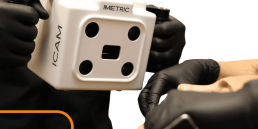
ICAM Photogrammetry: How Confident Dental Lab Delivers Once‑Impossible Full‑Arch Implant Precision
Advances in intraoral scanning, optimized scan protocols, and lab-driven validation provide clinicians and dental labs with powerful tools for excellence in 2025.
Zirconia Crowns: Benefits, Types, and Why Dentists Prefer Them
Zirconia crowns consist of zirconium dioxide, a crystalline ceramic engineered for exceptional toughness in restorative dentistry.
